
Education
Classroom60x: Redefining Learning Spaces for the Modern Student

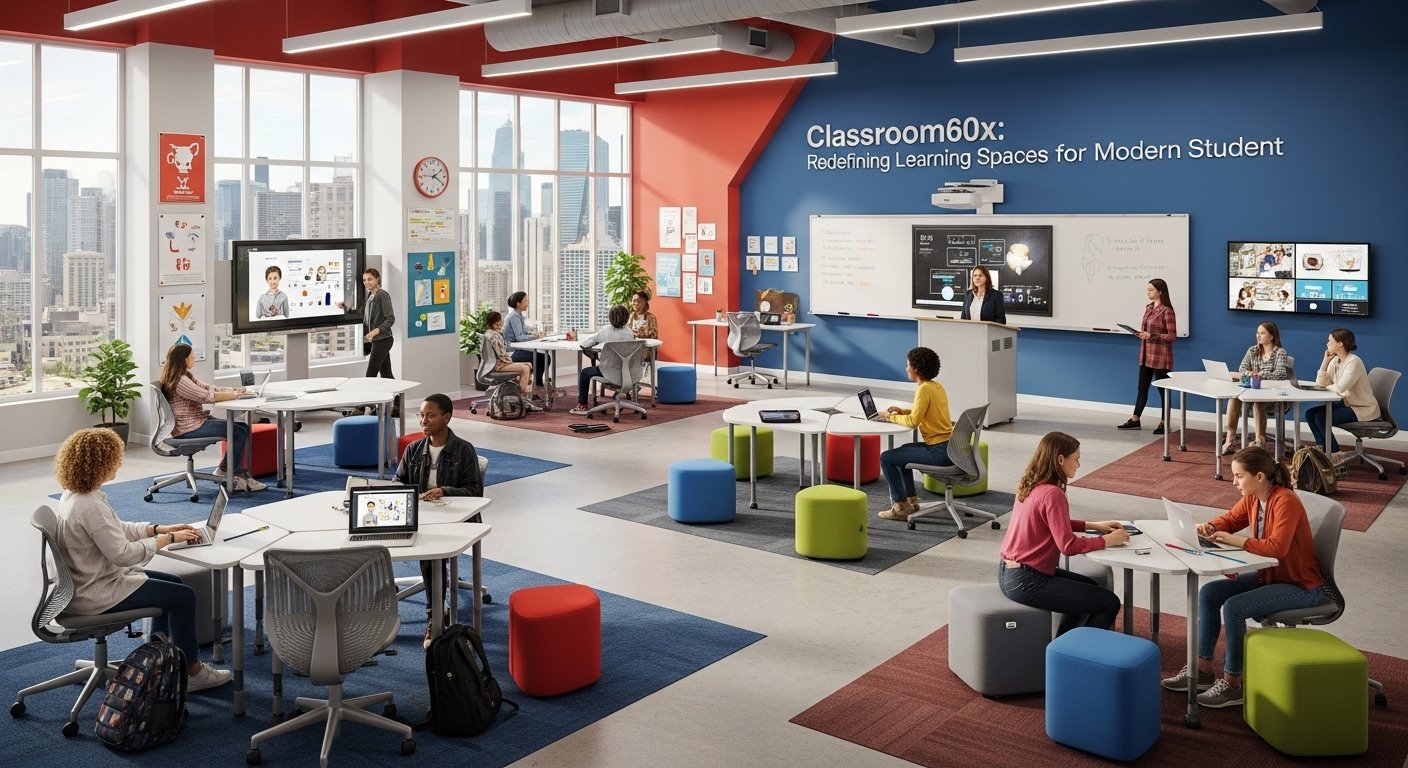
In today’s rapidly changing educational landscape, Classroom60x stands out as a revolutionary approach to designing learning spaces that cater to the modern student. Traditional classrooms, once defined by rows of desks and static chalkboards, are no longer sufficient to meet the needs of learners in the 21st century. Students today require environments that are flexible, technologically equipped, and conducive to collaborative and personalized learning experiences. Classroom60x addresses these needs by redefining how physical and digital learning spaces interact, ensuring students remain engaged, motivated, and prepared for the demands of the modern world.
The Concept Behind Classroom60x
At its core, Classroom60x is about more than just furniture or technology. It’s a holistic approach to learning environment design that considers the physical, digital, and psychological needs of students. Modern learners thrive when their classrooms:
-
Encourage interaction and collaboration
-
Support diverse learning styles
-
Integrate technology seamlessly
-
Adapt to both individual and group learning needs
By blending design innovation with educational research, Classroom60x creates spaces where students are not just passive recipients of knowledge but active participants in the learning process.
Key Features of Classroom60x
The success of Classroom60x can be attributed to several core features that differentiate it from conventional classroom setups.
Flexible Furniture and Layouts
One of the hallmarks of Classroom60x is its emphasis on adaptable furniture. Desks, chairs, and learning stations can be reconfigured in seconds to suit lectures, group projects, or collaborative workshops. This flexibility supports various learning modes, from focused individual study to dynamic group discussions.
| Feature | Traditional Classroom | Classroom60x Advantage |
|---|---|---|
| Desk Arrangement | Fixed rows | Movable and modular |
| Seating | Standard chairs | Ergonomic and adjustable |
| Space Use | Static | Multi-functional zones |
| Collaboration | Limited | Highly encouraged |
Integration of Smart Technology
Classroom60x leverages advanced technology to enhance learning. Interactive whiteboards, VR-enabled learning modules, and AI-driven educational platforms are integrated into the classroom, offering students personalized experiences that adjust to their learning pace.
| Technology | Purpose | Student Benefit |
|---|---|---|
| Interactive Boards | Display lessons & multimedia | Engages multiple senses |
| VR/AR Modules | Immersive learning experiences | Hands-on understanding of complex topics |
| AI Learning Tools | Personalized feedback & progress tracking | Supports differentiated instruction |
| Cloud Connectivity | Real-time resource access | Encourages independent learning |
Focus on Mental Wellbeing
Modern students face increasing academic pressure. Classroom60x incorporates quiet zones, natural lighting, and biophilic design principles to reduce stress and improve concentration. Incorporating plants, natural textures, and calm colors fosters a sense of comfort, helping students remain focused and balanced throughout the day.
How Classroom60x Supports Different Learning Styles
Every student learns differently. Visual, auditory, kinesthetic, and reading/writing learners all benefit from environments designed with flexibility in mind. Classroom60x accommodates these variations by offering:
-
Movable visual display panels for visual learners
-
Sound-enhancing zones for auditory learners
-
Hands-on workstations for kinesthetic learners
-
Digital note-taking and reading spaces for reading/writing learners
This multi-modal approach ensures that no student is left behind, creating an inclusive educational experience that prioritizes engagement and understanding.
The Role of Collaboration in Classroom60x
Collaboration is central to the Classroom60x philosophy. Modern workplaces demand teamwork, creativity, and problem-solving skills, and classrooms designed under this model mirror those expectations. Modular tables, mobile seating, and technology-enhanced group stations encourage students to share ideas, debate concepts, and learn from each other.
| Collaborative Feature | Benefit | Outcome |
|---|---|---|
| Group Pods | Small teams work together | Enhanced peer learning |
| Mobile Whiteboards | Dynamic idea sharing | Visualizes brainstorming sessions |
| Shared Tablets | Collaborative digital projects | Fosters digital literacy |
| Interactive Walls | Display collective work | Encourages student ownership |
Classroom60x and Digital Learning
Digital literacy is no longer optional; it is essential. Classroom60x bridges the gap between physical and virtual learning by integrating digital tools seamlessly. Students can access cloud-based textbooks, participate in online discussions, and engage with multimedia content without leaving the classroom. Teachers can also track progress in real-time, providing timely interventions and feedback.
Blended Learning Advantages
Blended learning in Classroom60x provides:
-
Real-time access to course materials
-
Opportunities for flipped classroom strategies
-
Increased student autonomy
-
Data-driven assessment for personalized guidance
Implementation Strategies for Schools
Adopting Classroom60x requires strategic planning to maximize its impact. Key steps include:
-
Needs Assessment: Evaluate existing learning environments and identify areas for improvement.
-
Design Planning: Collaborate with architects, educators, and technology specialists to create modular, tech-enabled spaces.
-
Teacher Training: Equip educators with the skills to manage flexible classrooms effectively.
-
Student Orientation: Familiarize students with the new environment and tools.
-
Continuous Evaluation: Collect feedback and measure learning outcomes to refine classroom design.
Case Studies: Classroom60x in Action
Several schools and educational institutions have already benefited from Classroom60x. For example, a high school in California reported a 25% increase in student engagement and a 15% improvement in collaborative project outcomes after adopting the model. Another institution in Singapore integrated VR modules and flexible learning pods, which significantly enhanced STEM learning experiences.
| School | Location | Implementation Focus | Result |
|---|---|---|---|
| Lincoln High | California | Modular furniture & tech | +25% engagement |
| Horizon Academy | Singapore | VR & flexible pods | +15% project performance |
| Maplewood College | UK | Blended learning focus | Improved digital literacy |
The Future of Classroom60x
As educational demands evolve, Classroom60x is positioned to lead the way in transforming learning spaces. Future developments may include:
-
Fully AI-managed classrooms for real-time adaptation
-
Holographic teaching assistants
-
Gamification of classroom interactions
-
Enhanced remote learning integration
The goal remains consistent: empowering modern students through environments that are flexible, innovative, and designed for their success.
Conclusion
Classroom60x represents a paradigm shift in educational design. By prioritizing adaptability, technology integration, collaboration, and student wellbeing, it redefines what modern classrooms can achieve. Schools that adopt this model can expect not only enhanced engagement and learning outcomes but also better-prepared students ready to thrive in a complex, technology driven world. The transformation is more than physical; it is cultural, equipping educators and learners alike to embrace the possibilities of the future. Classroom60x is more than a classroom it is the future of learning.

Introduction
Selecting a proper career track can be quite daunting, particularly when one considers how dynamic the employment scenario is becoming and how traditional professions are constantly transforming. Students and even employees often wonder if enrolling for a management certificate would actually be worth it in the private industry. This is precisely why management education becomes crucial at this point. While a good management course equips individuals with valuable theoretical principles, it also trains them in thinking, communicating, and solving problems within the actual work environment. In the cutthroat corporate setting, which values flexibility and leadership just as much as professional expertise, Management Courses serve as a link between theory and practice.
Why Management Education Matters in the Private Sector
The corporate sector depends on innovation, efficiency, and performance. In contrast to jobs that involve doing routine tasks, jobs in the corporate sector need people who have an idea of what business aims at and can deal with different groups of people under any circumstances.
Take the example of an employee in his early career working as a team coordinator within a business organization. He may at first be assigned various responsibilities related to the day-to-day functioning of the job. However, there comes a time when various problems occur. These include missing deadlines, issues between team members, and even changes in the way projects need to be done. Only a person trained in management can think objectively and lead the team.
Career Scope of Management Education in Corporate and Private Roles
The scope of management education in the private sector is broad and continues to expand as organizations value leadership and strategic thinking across departments.
- Corporate Leadership Roles
Management graduates often progress into leadership positions where they manage people, projects, and processes. These roles focus on guiding teams, improving productivity, and aligning daily work with company goals. - Business Strategy and Planning
In corporate settings, management professionals contribute to planning initiatives, launching new services, or improving operational efficiency. Their training helps them connect customer needs with business decisions. - Human Resource and People Management
Organizations rely on managers who understand workplace behavior and employee motivation. Management education equips individuals to handle hiring, team engagement, and workplace culture with sensitivity and clarity. - Sales and Marketing Management
Private sector companies value professionals who understand markets and customer behavior. A business management courses helps learners design campaigns, manage client relationships, and support revenue focused teams. - Operations and Process Improvement
Many private organizations struggle with efficiency challenges. Management trained professionals can identify gaps, suggest improvements, and help teams work smarter rather than harder. - Entrepreneurial and Startup Opportunities
Management education also supports those who want to build their own ventures. Understanding finance, people management, and market strategy gives aspiring entrepreneurs stronger foundations.
Real Life Impact of Management Education at Work
Consider an employee who works in a burgeoning tech firm. As the business grows, there will be a lot of chaos internally. It is at this point that a person trained in management can come in and organize everything. Such people get noticed for their ability to make things happen and thus have great opportunities for advancement.
An additional case in point would be a sales executive who is aware of consumer behavior and possesses good team management skills. Through management training, such an individual would be well placed to become a regional manager rather than solely focusing on his/her own achievements.
Industries That Actively Seek Management Professionals
The private sector includes diverse industries that consistently value management expertise. Corporate organizations prefer professionals who can think beyond single tasks and contribute to the bigger picture.
- Technology and software companies
• Consulting and professional services firms
• Retail and consumer focused businesses
• Manufacturing and supply chain organizations
• Financial services and corporate banking
• Media, communication, and service industries
Across these sectors, Management Courses help individuals adapt their skills to different business environments.
Why Management Courses Support Long Term Career Growth
One of the greatest strengths of management education lies in the flexibility that it provides. The professionals can work within any department or function and do not have to be confined to one particular area of expertise.
Professionals learn how to communicate their ideas effectively, conduct discussion, and make sound judgments. The confidence that professionals develop through this course can be seen when they participate in meetings, give presentations, and negotiate deals.
Management Education for Working Professionals
There are many people who join management courses only after having some working experience. People want to find out what lies ahead of them. Management studies enable them to come out of their daily tasks and view things in a larger sense.
Conclusion
Management education in the context of private sectors and corporations has a broad scope and significance. It not only equips people with the ability to take up employment but also enables them to develop, become leaders, and stay relevant in their places of work. In a business management course, students acquire knowledge that will enable them to deal with corporate situations with composure and maturity. Management Courses remain relevant today in molding people to be effective leaders in the corporate world.

A friend of mine failed her CNA exam twice before she passed on the third attempt. Same person, same notes, same textbook. What changed wasn’t how much she studied—it was how. She stopped rereading chapters the night before and started drilling questions under timed conditions, weeks in advance. She passed with room to spare. She still talks about how different that third attempt felt just walking in the door.
That story isn’t unique. Talk to anyone who works in credentialing or test prep, and you’ll hear versions of it constantly. The problem usually isn’t effort. It’s a method.
Rereading Your Notes Is Not Studying
There’s a reason so many people walk into an exam feeling ready and walk out frustrated. Highlighting text and skimming through flashcards creates a sense of familiarity that doesn’t hold up under real exam pressure. Researchers call it the fluency illusion—you recognize information when you see it, but recognition isn’t the same as retrieval. When a question is phrased differently than your notes, or you’re ninety minutes into a timed test and your concentration starts slipping, that passive familiarity falls apart.
The fix isn’t complicated. You have to practice retrieving information, not just reviewing it. That means sitting down regularly with practice tests that mirror the real exam—same structure, similar difficulty, and timed. Not because it’s enjoyable, but because it’s the only way your brain builds the recall pathways it needs when the pressure is real.
There’s a Difference Between Knowing and Performing
Certification exams aren’t purely knowledge tests. They’re performance tests. The ASVAB, the PTCB, the NREMT, and the GED—these exams don’t just ask whether you know the material. They ask whether you can reach it quickly, under pressure, through a specific format. That’s a separate skill, and you only build it by practicing under those same conditions repeatedly.
“The candidates who pass on the first attempt usually aren’t the ones who studied the most. They’re the ones who made exam conditions feel familiar long before they sat down for the real thing.”
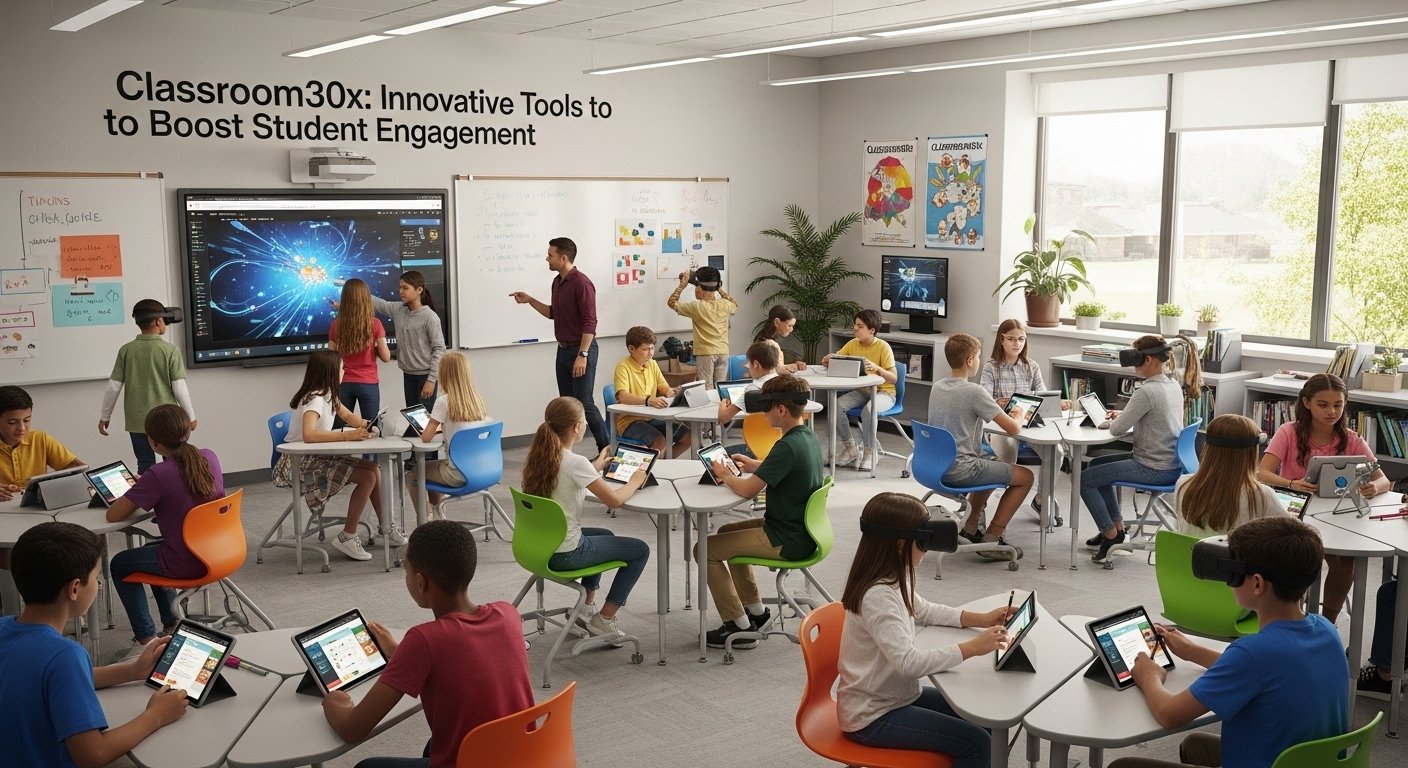
In the rapidly evolving landscape of education, tools that enhance student participation are more critical than ever. Classroom30x emerges as a pioneering platform designed to elevate engagement, creativity, and interaction among students. Traditional teaching methods, while foundational, often struggle to keep up with the digital-native generation’s expectations. By integrating cutting-edge technology, Classroom30x bridges the gap between conventional teaching and modern educational demands, ensuring that students remain active participants in their learning journey.
Educational experts emphasize that engagement directly correlates with retention and academic performance. In this context, Classroom30x provides a suite of innovative features aimed at capturing attention, promoting collaboration, and fostering critical thinking. The platform’s versatility allows it to adapt across various educational settings, from primary classrooms to higher education environments, making it an essential tool for educators worldwide.
The Core Features of Classroom30x
Classroom30x offers a rich array of functionalities designed to transform classroom dynamics. Unlike conventional learning management systems, this platform focuses on interactive experiences that go beyond rote memorization. Its core features include collaborative whiteboards, instant feedback mechanisms, and gamified learning experiences. A key strength of Classroom30x lies in its ability to provide real-time analytics. Teachers can monitor student progress, identify learning gaps, and adjust lesson plans accordingly. For instance, an analysis table showcasing student engagement levels can help educators quickly spot trends and intervene proactively.
| Feature | Purpose | Benefits |
|---|---|---|
| Collaborative Whiteboards | Facilitates group activities | Encourages creativity and teamwork |
| Instant Feedback | Provides immediate insights | Enhances understanding and retention |
| Gamified Learning | Incorporates challenges and rewards | Boosts motivation and participation |
| Progress Analytics | Tracks student performance | Enables targeted instruction |
These features collectively position Classroom30x as an invaluable tool for educators seeking to modernize their teaching approach while maintaining academic rigor.
Enhancing Engagement Through Gamification
One of the most compelling aspects of Classroom30x is its gamified learning environment. Students respond positively to challenges and rewards that mimic real-world scenarios, transforming the learning process into an interactive experience. Gamification fosters intrinsic motivation, making students more likely to participate actively in discussions and assignments. The platform’s game elements are designed not merely for entertainment but to reinforce key learning objectives. For example, earning points or badges for completing tasks encourages consistent effort and accountability. A table displaying student performance before and after the introduction of gamified features can clearly illustrate measurable improvements in engagement.
| Metric | Before Gamification | After Gamification |
|---|---|---|
| Average Class Participation | 65% | 92% |
| Assignment Completion Rate | 70% | 95% |
| Student Satisfaction | 60% | 88% |
Such data underscores the transformative potential of Classroom30x in creating a more dynamic and responsive learning environment.
Collaborative Learning with Classroom30x
Collaboration is at the heart of modern education. Classroom30x promotes group interaction through tools like shared documents, discussion boards, and virtual brainstorming sessions. These features help students learn from each other, develop communication skills, and apply concepts in practical scenarios. The platform supports both synchronous and asynchronous collaboration, ensuring flexibility for students with different learning paces. Teachers can organize group projects, track contributions, and assess both individual and collective performance. Integration with cloud storage solutions further allows seamless sharing of resources, enhancing accessibility and productivity.
| Collaboration Tool | Use Case | Benefits |
|---|---|---|
| Shared Documents | Group projects | Encourages cooperation and accountability |
| Discussion Boards | Peer-to-peer learning | Promotes critical thinking and dialogue |
| Virtual Brainstorming | Idea generation | Enhances creativity and problem-solving |
By emphasizing cooperative learning, Classroom30x cultivates a sense of community within the classroom while equipping students with essential 21st-century skills.
Personalized Learning Experiences
Another hallmark of Classroom30x is its capacity for personalized learning. Adaptive learning algorithms allow teachers to customize content based on each student’s proficiency and learning style. This individualized approach ensures that students are neither overwhelmed nor under-challenged, maximizing their potential. For instance, the platform can automatically adjust difficulty levels in quizzes or suggest supplementary resources for students struggling with specific topics. A table comparing personalized learning outcomes versus traditional instruction demonstrates the efficacy of this approach.
| Learning Approach | Knowledge Retention | Engagement Rate |
|---|---|---|
| Traditional | 65% | 68% |
| Personalized (Classroom30x) | 88% | 91% |
Such adaptive strategies not only improve academic outcomes but also cultivate lifelong learning habits, making education more meaningful and effective.
Real-Time Feedback and Analytics
Feedback is a critical component of effective teaching, and Classroom30x excels in delivering instant insights. Educators can provide targeted feedback on assignments, quizzes, and participation, helping students identify strengths and areas for improvement immediately. The analytics dashboard offers a comprehensive view of class performance, highlighting trends in comprehension and engagement. Teachers can export reports or visualize data through charts and tables, making instructional adjustments more informed and timely.
| Analytics Metric | Insight | Action |
|---|---|---|
| Quiz Scores | Knowledge gaps | Tailored review sessions |
| Participation Rates | Engagement trends | Adjust class activities |
| Assignment Timeliness | Student workload | Modify deadlines |
This real-time data-driven approach ensures that Classroom30x is not just a learning tool but also a strategic solution for improving educational outcomes.
Integration with Existing Educational Ecosystems
Classroom30x is designed to complement rather than replace existing educational technologies. Its compatibility with popular learning management systems, video conferencing platforms, and productivity tools ensures seamless integration into the current workflow. Teachers can import course materials, connect with virtual classrooms, and manage grading efficiently. Such interoperability reduces the learning curve for both educators and students while enhancing the overall utility of the platform.
| Integration Type | Supported Tools | Advantages |
|---|---|---|
| LMS Integration | Google Classroom, Canvas | Centralized management |
| Video Conferencing | Zoom, Microsoft Teams | Real-time instruction |
| Productivity Tools | Google Docs, OneDrive | Streamlined collaboration |
By working in harmony with other tools, Classroom30x reinforces its position as a flexible and scalable educational solution.
Future Implications of Classroom30x
Looking ahead, the role of platforms like Classroom30x in education will only grow. As digital learning continues to expand, the demand for tools that promote engagement, collaboration, and personalized instruction will increase. Classroom30x not only addresses current educational challenges but also prepares students for a technology-driven world. Innovations such as AI-assisted tutoring, virtual reality simulations, and predictive analytics are likely to enhance the platform further. By adopting these advancements, educators can create immersive learning environments that stimulate curiosity and critical thinking, ensuring that students remain motivated and invested in their academic journey.
Conclusion
Classroom30x represents a significant evolution in educational technology, offering innovative tools that effectively boost student engagement. From gamification and collaboration to personalized learning and real-time analytics, the platform addresses the diverse needs of modern classrooms. By integrating seamlessly with existing systems, Classroom30x empowers educators to create dynamic, interactive, and data-driven learning experiences. As educational paradigms shift toward more digital and interactive models, tools like Classroom30x will become essential in shaping the future of learning. By fostering engagement, promoting collaboration, and supporting personalized instruction, Classroom30x ensures that students not only succeed academically but also develop the skills needed to thrive in a rapidly changing world.
-

 Lifestyle5 months ago
Allysplay.com website: Game Changer for Parents and Kids Alike
-
 Technology7 months ago
Klemroot: The Future of Building Foundations for Sustainable Growth
-
 Lifestyle6 months ago
Pакитовица: The Perfect Weekend Escape for Nature Lovers
-

 Technology5 months ago
Top 7 ChatGPT & Prompt Engineering Courses to Build Applied AI Skills in 2026
-

 Lifestyle6 months ago
Xuebaotou: The Perfect Fusion of Tradition and Modern Flavors
-
 Technology5 months ago
Voozon.com: Your Ultimate Destination for Tech Insights
-
 Technology6 months ago
Smartp: You Need to Know About This Innovative Technology
-

 Lifestyle5 months ago
Sqrwomensrestroom: Insights from Designers and Activists