
Technology
Smartp: You Need to Know About This Innovative Technology


In today’s fast-paced digital era, staying ahead requires embracing innovations that streamline efficiency and enhance user experience. Smartp is one such groundbreaking technology that is rapidly gaining attention across multiple industries. From its unique design principles to its versatile applications, is not just another technological tool it represents a paradigm shift in how we interact with and manage information.
Businesses, tech enthusiasts, and developers alike are exploring to maximize productivity, improve connectivity, and create smarter solutions. As the global market continues to evolve, understanding Smartp’s capabilities is crucial for anyone aiming to leverage the latest technological advancements.
What is Smartp?
At its core, Smartp is an innovative technology platform designed to integrate advanced data management, real-time processing, and intelligent automation. Unlike conventional tools, combines efficiency with scalability, making it suitable for both small-scale operations and enterprise-level applications.
Key attributes of Smartp include:
| Feature | Description | Benefit |
|---|---|---|
| Real-Time Processing | Instantly processes data streams | Faster decision-making |
| Intelligent Automation | Automates routine tasks | Reduces operational costs |
| Scalable Architecture | Adaptable to business growth | Supports expansion effortlessly |
| User-Friendly Interface | Simple and intuitive design | Enhances user experience |
These features collectively ensure that is more than just software; it’s a comprehensive solution tailored for modern technological challenges.
The Core Technology Behind Smartp
Understanding requires a closer look at its technological foundation. Smartp leverages several modern advancements, including:
-
Cloud Computing Integration: Smartp operates seamlessly across cloud platforms, allowing data to be accessed, processed, and stored remotely.
-
Artificial Intelligence (AI): employs AI algorithms to predict trends, identify patterns, and optimize workflows automatically.
-
Internet of Things (IoT) Connectivity: Devices connected to Smartp communicate efficiently, creating a network of smart systems.
-
Advanced Data Encryption: Security is a priority, and ensures sensitive information is protected with end-to-end encryption.
These elements make Smartp highly adaptable, secure, and capable of supporting complex operations without compromising speed or reliability.
Applications of Smartp Across Industries
Smartp has wide-ranging applications across various sectors, including healthcare, finance, manufacturing, and logistics. By integrating, organizations can enhance efficiency, reduce costs, and deliver superior services.
| Industry | Application | Smartp Advantage |
|---|---|---|
| Healthcare | Patient data management | Faster diagnosis and secure records |
| Finance | Real-time transaction monitoring | Fraud detection and reporting |
| Manufacturing | Automated production lines | Reduced downtime and errors |
| Logistics | Supply chain tracking | Enhanced visibility and planning |
From improving operational workflows to enabling intelligent decision-making, provides tangible benefits that empower businesses to stay competitive.
Smartp and Business Transformation
Businesses adopting Smartp experience a notable transformation in operations. automation capabilities reduce the need for manual intervention, freeing up resources for more strategic tasks.
Boosting Efficiency
Smartp streamlines repetitive processes, allowing teams to focus on higher-level objectives. Companies report improvements in workflow efficiency by up to 35% when using for routine tasks.
Data-Driven Decision Making
With real-time analytics, Smartp enables organizations to make informed decisions quickly. By monitoring KPIs and performance metrics, businesses can adapt strategies instantly and achieve better outcomes.
Cost Savings
Implementing significantly reduces operational costs by minimizing human error and optimizing resource utilization. Companies can redirect saved resources toward innovation and growth initiatives.
Key Features That Make Smartp Unique
Several features set Smartp apart from conventional technologies. These are not just functional advantages they are game-changers for anyone looking to embrace modern tech solutions.
-
Seamless Integration: integrates effortlessly with existing IT systems without requiring major overhauls.
-
Customizable Workflows: Users can tailor to meet specific business needs, ensuring maximum relevance.
-
Enhanced Security: employs multi-layered encryption and authentication methods to protect sensitive data.
-
Intuitive Interface: Even users with minimal technical knowledge can navigate and utilize Smartp effectively.
These unique aspects position as a versatile solution adaptable to evolving technological landscapes.
Smartp in Daily Life
Beyond business applications, Smartp is increasingly becoming part of daily life. Smart homes, connected devices, and personal digital assistants all leverage intelligence to offer convenience, efficiency, and personalization.
| Use Case | Smartp Application | Benefit |
|---|---|---|
| Smart Homes | Automated lighting and climate control | Energy efficiency and comfort |
| Personal Devices | Voice-activated commands | Streamlined user interaction |
| Health Monitoring | Wearable devices | Real-time fitness and health tracking |
| Transportation | Smart traffic management | Reduced congestion and travel time |
Smartp’s presence in everyday life highlights its broad utility and capacity to make technology more intuitive and accessible.
Challenges and Considerations
While Smartp offers numerous advantages, it is important to consider potential challenges:
-
Initial Setup Costs: Although reduces long-term expenses, initial deployment may require significant investment.
-
Training Requirements: Users may need training to utilize all features effectively.
-
Integration Complexity: In some cases, integrating with legacy systems may require technical expertise.
Despite these challenges, the benefits of far outweigh the hurdles, making it a worthwhile investment for forward-thinking individuals and organizations.
Future Prospects of Smartp
The future of Smartp looks promising. With continuous advancements in AI, IoT, and cloud computing, is expected to evolve into an even more intelligent and adaptive platform.
Potential developments include:
-
Predictive Analytics Expansion: Smarter prediction of trends and potential challenges.
-
Enhanced Automation: More complex processes will be automated efficiently.
-
Greater Personalization: Devices and systems will adapt to individual user behaviors more seamlessly.
As technology continues to advance, is well-positioned to remain at the forefront of innovation.
Smartp vs. Competitors
Comparing with similar technologies reveals its unique advantages.
| Feature | Smartp | Competitor A | Competitor B |
|---|---|---|---|
| Real-Time Processing | Yes | Partial | No |
| AI-Powered Automation | Advanced | Basic | Moderate |
| Integration Flexibility | High | Medium | Low |
| Security | Multi-layer Encryption | Standard | Basic |
Smartp consistently outperforms competitors in critical areas, making it a preferred choice for both individuals and enterprises.
How to Get Started with Smartp
Adopting Smartp is straightforward if approached strategically:
-
Identify Needs: Determine which areas of your life or business would benefit most.
-
Choose a Plan: offers scalable solutions for different requirements.
-
Integration: Connect with existing systems and devices.
-
Training: Ensure that users are familiar with the interface and features.
-
Monitor and Optimize: Continuously track performance to maximize benefits.
By following these steps, anyone can harness full potential and experience transformative results.
Conclusion
Smartp is more than a technological innovation it is a versatile solution redefining how we interact with technology across industries and daily life. From real-time processing to intelligent automation, provides measurable improvements in efficiency, decision-making, and user experience.
For businesses aiming to stay competitive or individuals seeking smarter solutions, understanding and implementing is no longer optional it’s essential. With its robust features, scalability, and forward-looking design, represents the future of intelligent technology. Whether for professional applications or personal convenience, embracing today ensures readiness for the challenges and opportunities of tomorrow.


According to the PIB, citing the NASSCOM AI Adoption Index, 87% of Indian enterprises actively use AI.
According to Forrester, reported by The Economic Times, only 10 to 15% of AI pilots scale into sustained production. Strong training matters because adoption is rising faster than the quality of execution.
In this article, you will discover the top Prompt Engineering programs designed to bridge that gap and drive real Applied AI.
How We Selected These Prompt Engineering Courses
- Focus on practical, real-world skills, not theory alone.
- Alignment with tools, frameworks, or workflows used in 2026.
- Strong relevance to India job market expectations, where AI hiring momentum remains strong, and AI or ML roles continue to grow faster than the broader market.
- Courses offered by reputable platforms, universities, or industry providers.
- Emphasis on hands-on projects, exercises, or applied learning.
Overview: Best Prompt Engineering Courses Free With Certificate for 2026
| # | Program | Provider | Primary Focus | Delivery | Ideal For |
| 1 | Prompt Engineering for ChatGPT | Great Learning | Core prompting, LLM basics, business use cases | Online, self-paced | Beginners |
| 2 | Prompt Engineering with the OpenAI API | DataCamp | API-based prompting with Python | Online, self-paced | Early technical users |
| 3 | Foundations of Prompt Engineering | AWS Skill Builder, via Class Central | Structured prompting, safety, bias, FM use | On-demand | Intermediate learners |
| 4 | ChatGPT for Beginners | Great Learning | Practical ChatGPT use for writing, research, and work tasks | Online, self-paced | Absolute beginners |
| 5 | Prompt Engineering for Everyone | Cognitive Class | Prompt design fundamentals for non-technical learners | Online, self-paced | General learners |
| 6 | ChatGPT Prompt Engineering for Developers | DeepLearning.AI | Prompting for app development and custom chatbots | Online, short course | Developers |
| 7 | AI for Business with ChatGPT & Copilot Online | Noble Desktop | Workplace AI, ChatGPT, Copilot, productivity workflows | Self-paced online with expert support | Business users and managers |
Best Courses for Mastering Prompt Engineering and Applied AI in 2026
1. Prompt Engineering for ChatGPT, Great Learning
This Prompt Engineering course free with certificate, and focuses on the mechanics of input design.
It is a beginner-friendly course focused on LLM basics, better prompt design, output refinement, and applied use cases, including content creation, coding, and customer support.
It introduces advanced strategies that allow users to control the tone, structure, and depth of AI responses with surgical precision.
Specs List:
- Delivery & Duration: Online, self-paced, 3.0 learning hours.
- Credentials: Industry-recognized certificate, with certificate access presented on the course page.
- Instructional Quality & Design: Beginner-friendly video course with quizzes, skill modules, and practical coverage of prompt structure, response refinement, and common mistakes.
- Support: Self-paced learning through the Great Learning platform.
Key Outcomes / Strengths
- Builds a clear foundation in the essentials of generative AI, LLMs, and prompt engineering.
- Teaches prompt-refinement methods to improve accuracy and relevance.
- Connects prompting to work tasks such as content creation, coding, and support use cases.
- Fits learners who want a short, low-friction entry point with certificate value.
2. Prompt Engineering with the OpenAI API, DataCamp
This is the strongest pick here for learners who want prompting tied to code and real API behavior.
DataCamp frames the course around prompt design principles, OpenAI API parameters, and hands-on exercises in Python.
This course is more useful to technical teams building production workflows than to casual users.
Specs List:
- Delivery & Duration: Online, self-paced, 4 hours, 15 videos, 55 exercises.
- Credentials: Statement of Accomplishment.
- Instructional Quality & Design: Exercise-heavy format with practical OpenAI API work in Python, real-world problems, and prompt iteration practice.
- Support: Delivered inside the DataCamp learning environment, with structured exercises and course resources.
Key Outcomes / Strengths
- Teaches prompting in the context of actual OpenAI API usage, not only chat interfaces.
- Covers control settings such as temperature and max_tokens.
- Includes strong practice volume through 55 exercises.
- Suits analysts, developers, and technical product teams who need applied prompt workflows.
3. Foundations of Prompt Engineering, AWS Skill Builder via Class Central
This program stands out for learners who want a more structured view of prompting beyond basic prompt writing.
The course covers prompt design principles, advanced techniques, misuse risks, and bias mitigation for foundation models, making it relevant for teams working in enterprise or governed environments.
Specs List:
- Delivery & Duration: On-demand, 4 hours.
- Credentials: Free certificate, certificate available.
- Instructional Quality & Design: Intermediate-level curriculum focused on prompt principles, advanced techniques, misuse prevention, and bias mitigation.
- Support: Delivered through AWS Skill Builder and surfaced on Class Central for course access and review visibility.
Key Outcomes / Strengths
- Moves beyond basics into safety, misuse, and bias topics.
- Useful for enterprise learners working with foundation model governance concerns.
- Short enough for working professionals, but broader than many entry-level prompt courses.
- Good fit for cloud, data, and AI practitioners who want a more formal foundation.
4. ChatGPT for Beginners, Great Learning
This introductory Chatgpt free course provides a clear entry point into the world of Generative AI.
It is a good inclusion for first-time learners because it teaches prompting inside real tasks such as content creation, summarization, coding help, marketing prompts, and productivity workflows.
Specs List:
- Delivery & Duration: Online, self-paced, 3.0 learning hours.
- Credentials: Completion certificate available after successful completion and payment of the certificate fee.
- Instructional Quality & Design: Beginner-focused modules, quizzes, prompt examples, and practical tasks across writing, summarization, coding, and business use.
- Support: Fully self-paced with lifetime course access noted in the FAQ.
Key Outcomes / Strengths
- Strong for non-technical users who want immediate workplace value.
- Covers prompt engineering basics inside business and productivity tasks.
- Includes practical ChatGPT use for emails, reports, summaries, and coding support.
- Fits students, marketers, early professionals, and AI beginners well.
5. Prompt Engineering for Everyone, Cognitive Class
This course targets the broadest audience of the group. The page presents it as a beginner-friendly option with no technical requirements.
It focuses on creating better prompts, understanding context, improving response quality, and mitigating bias when interacting with AI systems.
Specs List:
- Delivery & Duration: Online, self-paced, estimated effort 5 hours.
- Credentials: Credential information is not clearly listed on the course page provided.
- Instructional Quality & Design: Simple, non-technical introduction centered on prompt writing quality, context handling, and bias awareness.
- Support: Delivered through the Cognitive Class platform.
Key Outcomes / Strengths
- No technical prerequisites, which lowers the barrier for first-time learners.
- Covers useful prompt basics without forcing coding knowledge.
- Includes bias and context awareness, which matter in real business use.
- Best for general professionals who need AI literacy before specializing in tools.
6. ChatGPT Prompt Engineering for Developers, DeepLearning.AI
This remains one of the most targeted programs for builders who want to use prompting inside products, scripts, or internal tools.
The course is short, but the focus is sharp: prompting best practices for application development, prompt iteration, and building custom chatbot experiences using the OpenAI ecosystem.
Specs List:
- Delivery & Duration: Online short course, 1 hour 30 minutes, 9 video lessons, 7 code examples.
- Credentials: Free enrollment is listed, but the page provided does not clearly state a certificate.
- Instructional Quality & Design: Developer-oriented format with code examples, applied lessons, and direct instruction from Isa Fulford and Andrew Ng.
- Support: Delivered through DeepLearning.AI’s short-course platform.
Key Outcomes / Strengths
- Built for developers, not only general users.
- Teaches prompt engineering in the context of application building.
- Includes custom chatbot capabilities, useful for internal tools and products.
- High signal for technical learners who want a fast, practical course.
7. AI for Business with ChatGPT & Copilot Online, Noble Desktop
This is the broadest business-facing option on the list. Rather than isolating prompt engineering, Noble Desktop packages prompt workplace execution across ChatGPT and Microsoft Copilot.
This makes the course useful for managers, operations teams, content teams, and business users who need direct productivity gains.
Specs List:
- Delivery & Duration: Self-paced online with expert support, 18 clock hours, 3 modules, start anytime.
- Credentials: Verified digital certificate of completion.
- Instructional Quality & Design: Project-based training with quizzes, mini projects, three progressive modules, and coverage across ChatGPT, advanced ChatGPT workflows, and Microsoft Copilot for Microsoft 365 tasks.
- Support: Live support, discussion forums, instructor messaging, and one 1-on-1 bonus training session.
Key Outcomes / Strengths
- Strongest business workflow focus among the seven courses.
- Covers both ChatGPT and Copilot, which match common office AI stacks in 2026.
- Includes expert support and 1-on-1 help, which is rare in this list.
- Best for business users who need operational productivity, not just a theoretical prompt.
Final Thoughts
In 2026, prompt engineering matters because AI adoption is rising fast, while scalable execution still lags across many organizations.
For all learners, the strongest course choice depends on your goal: fast entry, developer workflow, or business productivity.
Selecting the right online free courses with certificate today offers a practical path to stronger Applied AI skills in 2026.
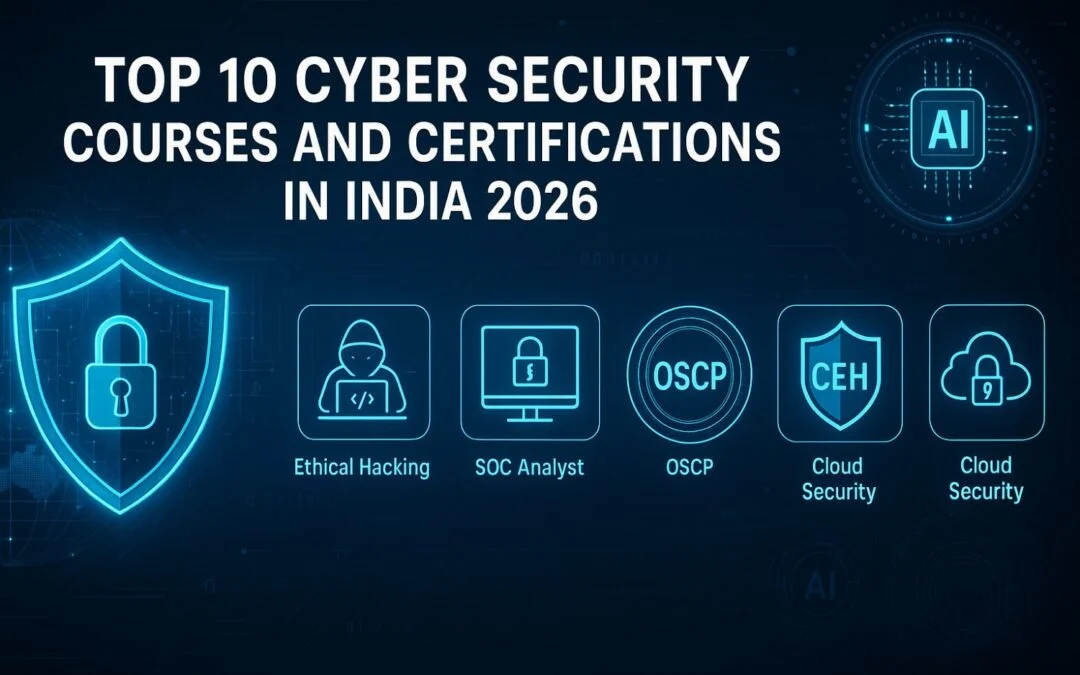
From data breaches and ransomware attacks to advanced nation-state threats, organizations in any industry are spending a lot of money on cybersecurity talent to ensure their machines, data, and clients are secure.
Consequently, cybersecurity experts are some of the most sought-after technology experts in the global market. Jobs like security analysts, ethical hackers, cloud security engineers, and security architects are registering high rates of job growth, high-paying salaries, and opportunities around the world.
Nevertheless, to enter or further this profession, one needs formal education, practical abilities, and qualifications that reveal actual professionalism.
In this list, we discuss 10 of the best cybersecurity courses to study in 2026, including the learning options of the most prominent universities and professional learning platforms.
How We Selected These Cybersecurity Courses
- Emphasis on practical, real-world cybersecurity skills, rather than theory alone
- Alignment with tools, frameworks, or workflows used in 2026
- Good relevance to US job market expectations
- Courses offered by good platforms, universities, or industry providers
- Focus on hands-on projects, exercises, or applied learning
10 Programs to Consider to Learn Cybersecurity in 2026
1. Post Graduate Program in Cybersecurity by The McCombs School of Business at The University of Texas at Austin
This executive-style Cybersecurity Course by The McCombs School focuses on cybersecurity leadership, enterprise security strategies, and risk management.
It is designed for professionals responsible for cybersecurity decision-making or managing digital infrastructure.
Delivery & Duration: Online program with structured modules
Credentials: Certificate of Completion from UT Austin
Instructional Quality & Design: Strategic and technical curriculum combining security management and operational insights
Support: Guided learning modules and academic support
Key Outcomes
- Understanding cybersecurity risk management frameworks
- Security strategy for organizations and enterprise environments
- Practical insights into security governance and compliance
- Ideal for leaders bridging technology and business strategy
2. Professional Certificate in Cybersecurity — Google
This entry-level cybersecurity certificate focuses on building foundational security knowledge while introducing learners to security operations concepts.
Delivery & Duration: Online self-paced program
Credentials: Professional Certificate from Google
Instructional Quality & Design: Industry-focused training aligned with entry-level cybersecurity roles
Support: Guided labs and hands-on exercises
Key Outcomes
- Security fundamentals and threat detection concepts
- Introduction to security operations workflows
- Hands-on learning through practical exercises
- Suitable for beginners entering cybersecurity
3. Professional Certificate in Cybersecurity – Johns Hopkins University
This university-backed Cybersecurity Certificate Program by Johns Hopkins University introduces learners to modern cybersecurity threats, frameworks, and defensive practices. It is designed for professionals seeking structured training in cybersecurity fundamentals and advanced defensive strategies.
Delivery & Duration: Online, flexible schedule
Credentials: Certificate from Johns Hopkins University
Instructional Quality & Design: University-designed curriculum combining technical concepts with applied case studies
Support: Structured modules and instructor-led guidance
Key Outcomes
- Foundations of cybersecurity architecture and risk management
- Coverage of modern threat landscapes and attack vectors
- Exposure to security frameworks and governance models
- Credibility of a top US research university
4. Cybersecurity MicroMasters — RIT
This MicroMasters program covers core cybersecurity topics such as cryptography, network security, and risk management.
Delivery & Duration: Online multi-course program
Credentials: MicroMasters credential from Rochester Institute of Technology
Instructional Quality & Design: Graduate-level academic curriculum with applied learning
Support: Structured coursework and assessments
Key Outcomes
- Advanced understanding of security architecture
- Deep knowledge of cryptographic systems
- Coverage of enterprise risk management
- Pathway to advanced academic credentials
5. Cybersecurity Specialization — University of Maryland
This specialization introduces cybersecurity fundamentals with a strong focus on cryptography and secure system design.
Delivery & Duration: Online specialization program
Credentials: Certificate from the University of Maryland
Instructional Quality & Design: Academic curriculum combining theory with applied exercises
Support: Course community and guided assignments
Key Outcomes
- Cryptography fundamentals and applications
- Secure system design principles
- Threat modeling techniques
- Strong academic grounding in cybersecurity
6. Certified Ethical Hacker (CEH) — EC-Council
The CEH certification trains professionals to think like attackers in order to defend systems effectively. It focuses on penetration testing and vulnerability identification.
Delivery & Duration: Instructor-led or self-paced training
Credentials: Certified Ethical Hacker certification
Instructional Quality & Design: Industry-recognized certification with technical labs
Support: Training partners and exam preparation resources
Key Outcomes
- Ethical hacking techniques and methodologies
- Penetration testing tools and practices
- Vulnerability analysis skills
- Widely recognized industry credential
7. CompTIA Security+ Certification — CompTIA
CompTIA Security+ is one of the most widely recognized entry-level cybersecurity certifications.
Delivery & Duration: Self-paced training + certification exam
Credentials: CompTIA Security+ certification
Instructional Quality & Design: Vendor-neutral cybersecurity curriculum
Support: Extensive training resources and exam preparation
Key Outcomes
- Core cybersecurity principles
- Network and system security concepts
- Risk management and compliance fundamentals
- Industry-recognized baseline certification
8. IBM Cybersecurity Professional Certificate — IBM
This certificate introduces learners to security operations center (SOC) workflows and cybersecurity tools.
Delivery & Duration: Online self-paced program
Credentials: IBM Professional Certificate
Instructional Quality & Design: Industry-oriented learning with guided labs
Support: Hands-on labs and assignments
Key Outcomes
- SOC operations fundamentals
- Incident response and threat analysis
- Exposure to real-world cybersecurity tools
- Strong beginner pathway into cybersecurity role.
9. Advanced Cybersecurity Program — Stanford Online
Stanford’s advanced program focuses on security engineering and modern cybersecurity challenges.
Delivery & Duration: Online academic program
Credentials: Certificate from Stanford Online
Instructional Quality & Design: Graduate-level cybersecurity instruction
Support: Faculty-led lectures and advanced coursework
Key Outcomes
- Security engineering frameworks
- Advanced cryptography concepts
- Research-informed cybersecurity practices
- Designed for experienced professionals
10. Applied Cybersecurity Fundamentals — SANS Institute
SANS training programs are widely respected for their practical cybersecurity instruction and hands-on labs.
Delivery & Duration: Online or live training
Credentials: SANS certificate
Instructional Quality & Design: Highly technical, practitioner-focused curriculum
Support: Instructor-led training and lab environments
Key Outcomes
- Hands-on security operations skills
- Real-world threat detection training
- Exposure to professional cybersecurity tools
- Industry-recognized security training
Final Thoughts
Digital infrastructure, cloud computing, and technologies of connection have evolved into essential capabilities of the organization, and cybersecurity has become a critical aspect.
As cyber threats continue to increase in sophistication, the need to hire experienced professionals capable of securing systems, identifying threats, and dealing with security risks continues to be high in all industries.
The courses proposed in this list emphasize both the university-supported courses and industry-approved requirements that enable students to develop relevant cybersecurity competencies.
Regardless of whether you are entering the field of security or aim to enhance your knowledge further, the courses can provide systematic ways to acquire knowledge and qualifications required in the contemporary world of cybersecurity.

The term Milyom has intrigued scholars and enthusiasts alike for decades, tracing its roots through a complex web of historical and cultural contexts. Its earliest known references appear in ancient manuscripts, suggesting a symbolic rather than literal significance. Over centuries, the word evolved, reflecting shifts in societal values and linguistic nuances. Scholars argue that understanding Milyom requires a deep exploration of both its historical applications and the philosophical frameworks that influenced its adoption. This multifaceted origin highlights how language and culture intertwine, shaping human perception and societal practices.
In historical records, Milyom was often associated with transformative events, particularly those that involved innovation, trade, or cultural exchange. Early civilizations referenced Milyom as a concept that bridged spiritual and material understanding, linking human endeavors to a broader cosmological order. As societies developed, the word maintained its symbolic significance, appearing in literary texts, religious commentaries, and oral traditions. These repeated references over time indicate the enduring relevance of Milyom, which has continued to resonate with modern audiences seeking to explore its depth and meaning.
The Linguistic Evolution of Milyom
Language is a living entity, and Milyom exemplifies this fluidity perfectly. From its archaic forms to contemporary usage, the word has undergone significant phonetic and semantic transformations. Linguists note that these changes often reflect broader cultural and social shifts, including migration, trade, and intellectual exchange. The evolution of Milyom illustrates the adaptive nature of language, as societies modify terms to align with contemporary understanding and communicative needs. The study of linguistic journey reveals not only the history of a word but also the history of human interaction itself.
Modern dictionaries and linguistic databases document several variations of Milyom, each highlighting distinct regional interpretations and phonetic adaptations. For example, in certain areas, connotes wisdom and foresight, while in others, it emphasizes creativity and innovation. These differences underscore the importance of regional context in interpreting the term accurately. By examining these linguistic nuances, scholars and enthusiasts can appreciate the depth and versatility, understanding it as more than just a word but as a reflection of human intellect and cultural heritage.
Cultural Significance and Symbolism of Milyom
Beyond its linguistic roots, Milyom holds considerable cultural and symbolic importance. In various societies, it represents ideals such as enlightenment, progress, and balance, often appearing in literature, art, and ceremonial practices. Its symbolic resonance has made it a source of inspiration for generations, shaping moral values, artistic expressions, and philosophical thought. The enduring cultural presence of demonstrates its power to transcend time and context, maintaining relevance across diverse communities.
The use of Milyom in cultural rituals underscores its symbolic weight. Historical accounts describe ceremonies where was invoked to encourage harmony and collective understanding, highlighting its spiritual and social utility. Contemporary applications, particularly in creative and academic fields, show that continues to inspire innovation and critical thinking. Its dual role as both a symbol and a tool emphasizes its ongoing significance, bridging past traditions with modern aspirations.
Milyom in Literature and Arts
The literary world has long embraced Milyom, weaving it into narratives to evoke deeper meaning or to enhance thematic complexity. Writers often employ the term to signify transformation, knowledge, or unseen connections within a story, enriching readers’ interpretive experiences. Poets and novelists alike find in a linguistic device capable of conveying abstract ideas, emotional depth, and cultural identity, demonstrating the term’s versatility in creative expression.
In visual arts, Milyom has inspired artists to explore conceptual representations that blend history, mythology, and philosophy. Paintings, sculptures, and digital media often incorporate as a motif, symbolizing growth, transition, and interconnectivity. Its influence on both literary and visual arts highlights its unique capacity to bridge tangible and intangible realms, making not just a word but a cultural artifact that continues to shape creative practices.
Modern Relevance and Applications of Milyom
Today, Milyom finds relevance in diverse modern contexts, from education to technology and organizational development. Its conceptual framework encourages innovation, critical thinking, and strategic insight, making it a valuable tool for leaders and thinkers. The application of in modern discourse reflects its adaptability, allowing a historically rich term to remain impactful in contemporary settings.
Table: Modern Contexts of Milyom
| Field | Application of Milyom | Significance |
|---|---|---|
| Education | Teaching critical thinking | Encourages analytical reasoning |
| Technology | Innovation frameworks | Guides creative problem-solving |
| Business & Leadership | Strategic decision-making | Supports adaptive strategies |
| Arts & Media | Symbolic and thematic inspiration | Enhances creative expression |
The integration of Milyom into these fields demonstrates its functional versatility and continued relevance. By bridging historical symbolism with contemporary needs, serves as a testament to the enduring power of cultural and intellectual heritage.
Philosophical Implications of Milyom
Milyom also carries significant philosophical weight, offering insights into human thought, ethics, and existence. Philosophers have long debated its implications, exploring how can illuminate understanding of consciousness, morality, and societal structures. By framing complex ideas through the lens, thinkers can articulate nuanced perspectives, encouraging deeper reflection on human experience and the nature of knowledge.
In ethical discourse, Milyom often represents balance between individual ambition and collective responsibility. Its philosophical applications extend to modern debates on social justice, environmental stewardship, and technological ethics. Through this lens, is not only a cultural or linguistic artifact but also a framework for contemplating life’s fundamental questions, fostering awareness, empathy, and thoughtful action in both personal and societal contexts.
Global Recognition and Influence of Milyom
While originating from specific historical contexts, Milyom has achieved global recognition due to its universal appeal and interpretive flexibility. Academics, artists, and cultural commentators worldwide acknowledge its significance, exploring its relevance across languages, societies, and disciplines. This global influence underscores the term’s capacity to transcend boundaries, connecting diverse communities through shared understanding and appreciation.
International events and symposiums often feature Milyom in discussions of heritage, innovation, and cross-cultural dialogue. Its incorporation into educational curricula and cultural exhibitions highlights the ongoing efforts to preserve and disseminate its meaning. The global engagement with illustrates how a historically rooted concept can resonate widely, offering insight and inspiration across generations and geographies.
Conclusion
The journey of Milyom from its ancient origins to its modern applications reveals a rich tapestry of cultural, linguistic, and philosophical significance. Its symbolic, creative, and practical applications continue to inspire scholars, artists, and thinkers worldwide. Understanding allows individuals and communities to appreciate not only historical depth but also contemporary relevance, bridging the past with the present in meaningful ways.
By exploring Milyom through its origins, evolution, cultural impact, and philosophical implications, we gain a comprehensive view of a term that transcends language and time. Its enduring relevance encourages reflection, innovation, and creative expression, ensuring that remains a significant and inspiring concept for generations to come.
-

 Lifestyle1 week ago
Allysplay.com website: Game Changer for Parents and Kids Alike
-
 Lifestyle2 months ago
Pакитовица: The Perfect Weekend Escape for Nature Lovers
-

 Technology1 week ago
Voozon.com: Your Ultimate Destination for Tech Insights
-

 Lifestyle1 month ago
Xuebaotou: The Perfect Fusion of Tradition and Modern Flavors
-
 Technology2 months ago
Klemroot: The Future of Building Foundations for Sustainable Growth
-
 Education2 months ago
Classroom60x: Redefining Learning Spaces for the Modern Student
-
 Entertainment1 week ago
Simpcit6: Taking the Gaming Community by Storm
-

 Lifestyle1 month ago
Berushbrand com: Your Ultimate Guide to Modern Branding Solutions